

Recent Podcasts




Recent Articles
Register
Editors Pick
KBI Podcasts
Podcasts



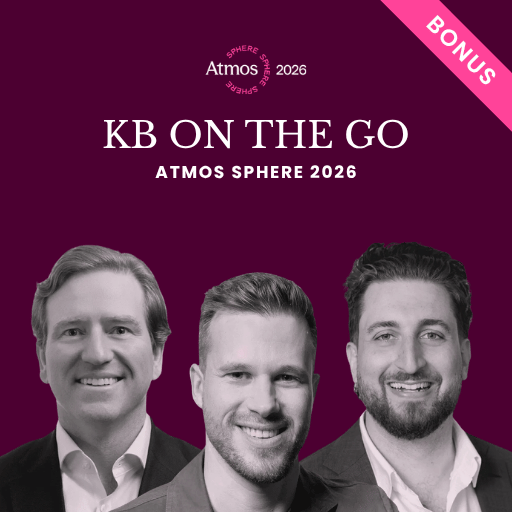








Why Most Enterprise Security Teams Would Fail a Military Readiness Test
Lee Rossey argues that most enterprise security teams would fail a real cyber crisis because they prepare for audits rather than operational readiness. Drawing on military cyber doctrine, he contrasts the military's continuous, high-fidelity training and mission rehearsals with the corporate world's reliance on annual tabletop exercises that rarely reflect modern attack conditions. As AI accelerates the sophistication and speed of cyber threats, organizations must shift from a prevention-first mindset to one focused on detection, containment, recovery, and continuous validation. Rossey advocates for realistic cyber simulations that test people, processes, tools, and AI agents together under adversarial conditions before deployment. He introduces the concept of AI Proving Grounds—environments where organizations can safely train and validate both human operators and autonomous AI systems. His central message is that cyber resilience is not achieved through policies or assumptions but must be continuously proven through realistic practice that exposes weaknesses before attackers do. Read More

Tenable Patch Tuesday Commentary – July 2026
We knew this day would come. June 2026 Patch Tuesday broke the record, and July blew the record out of the water. July is the first time in Patch Tuesday’s history that over 500 CVEs were ... Read More

The Cybersecurity Problem We Still Haven’t Solved
Cybersecurity discussions often focus on new threats and emerging technologies, but many organisations are still struggling with a far more fundamental problem: knowing what assets exist within their environment. In this byline, Steve Hunter from Arctic Wolf discusses how visibility gaps, missing controls and growing attack surfaces continue to undermine security programs, and why understanding what you have remains the first step to reducing cyber risk. Read More

Shadow AI Is the Quiet Risk Behind the AI Dramas
While the world is distracted by the Anthropic Fable 5 banning, shadow AI continues to quietly sit as a real risk faced by the majority of Australian businesses. Read More
How Hyper-Synthetic Data Is Shifting Cybersecurity From Proactive to Preemptive
The traditional cybersecurity landscape—dominated by legacy firms with massive, proprietary datasets of past attacks—is undergoing a disruptive shift. According to recent Gartner research, the future of defense belongs to agile companies leveraging Hyper-Synthetic Data (HSD). HSD is entirely synthetic data generated by LLMs and machine-learning models to simulate highly specific, realistic cyber environments and advanced adversary behaviors. As threat actors deploy sophisticated AI automation, such as token exhaustion attacks, organizations must move from proactive response to preemptive mitigation. Because testing unproven ... Read More

Our Vision for True Data Portability Across Hyperscalers and Hypervisors
If you caught my keynote at NetApp INSIGHT, you heard me say it loud and clear: NetApp’s data platform is the only hyperscaler-neutral, hypervisor-neutral data platform in the world. That’s not just a tagline — it’s a foundational advantage with data, clouds, and the future of Intelligent Data Infrastructure delivering AI transformation. Why Data Portability Matters Across the Cloud Let’s start with the basics. Most enterprises today are multi-cloud, whether by design or necessity. You might have workloads in AWS, Azure, Google Cloud, and on-premises, all at once. But here’s the catch: most data platforms force you to pick ... Read More