


The Scene
Over the weekend, the heat in Miami wasn’t the only thing rising. Oracle Red Bull Racing’s approach to operationalising their data with the intent to win was at the forefront.
Amongst the elite and the fast cars, there’s a version of Formula 1 that most people understand, and then there’s the version that actually decides who wins races; one driven by the data.
Inside Oracle Red Bull Racing, the real competition isn’t just happening on track, it’s happening inside a system designed to out-think, out-simulate, and out-execute every rival on the track.
Before a tyre touches asphalt, Red Bull has already run the race billions of times.
The team leverages Monte Carlo simulations – a computerised mathematical technique that models uncertainty in systems to predict a wide range of potential outcomes.
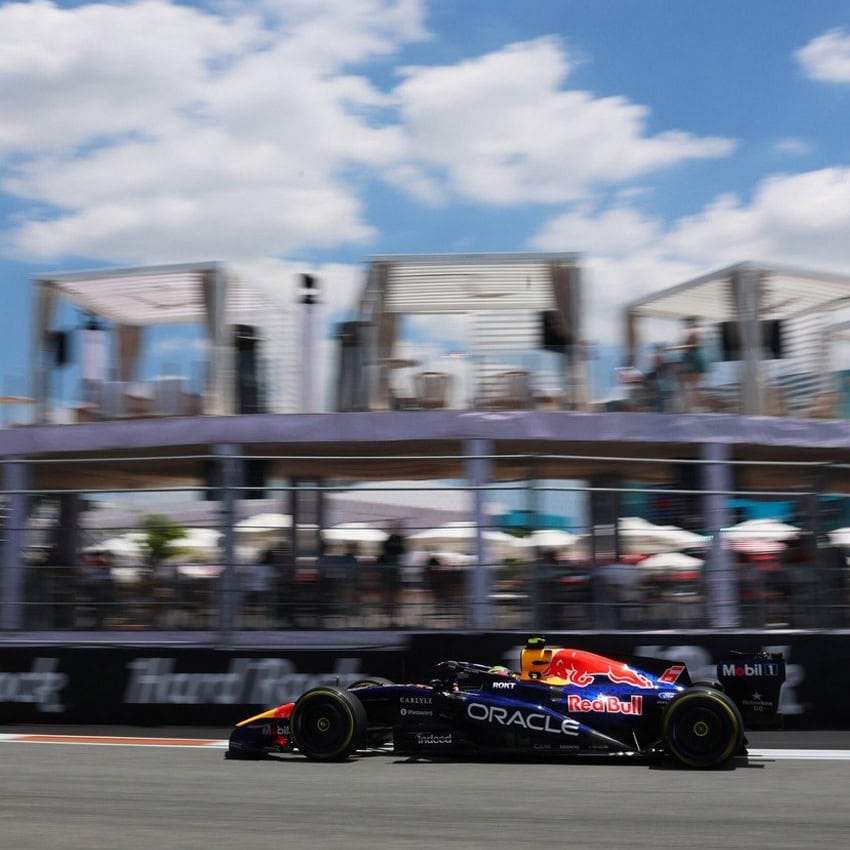
Before moving to cloud based systems, Red Bull ran billions of race simulations. Now, that number has doubled.
Jack Harington, Partnerships Group Lead at Oracle Red Bull Racing commented, “We’ve increased from around four billion simulations up to eight billion,” said Jack Harington.
Each simulation tests different scenarios:
- What if the safety car comes early?
- What if degradation spikes?
- What if a rival undercuts?
Layer enough scenarios together and you can drive the perfect outcome to win.
And these aren’t just predicting their own moves. They’re predicting everyone else’s.
“We’re not only simulating what decisions we should make, but also what our opponents will do based on our decisions.” Harington went on to say.
More simulations equals more scenarios and more scenarios results in fewer surprises.
As all the other teams have data, like telemetry, GPS, race history and weather feeds – that’s not always the advantage. It’s how to to weaponise that data to win.
“It’s how you weaponise the data that you have.” Added Harington.
Red Bull Racing doesn’t just analyse information. It operationalises it, to power the decisions in a split of a second.
In one recent race, an AI-driven system helped inform a critical call to instruct Max Verstappen to give back a position.
The Limitations
Under Formula One’s cost cap, efficiency is ultimately everything.
The Formula One cost cap is a financial rule that limits how much teams can spend each season on building and running their cars, designed to make the sport fairer and more sustainable.
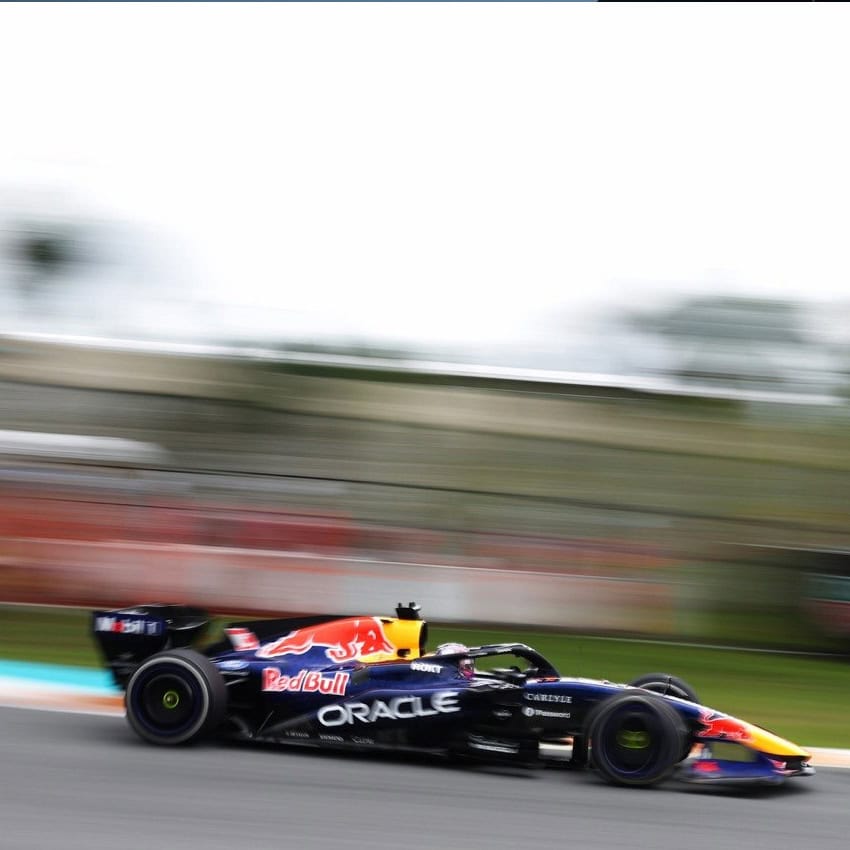
The rule was introduced in 2021 to stop big budget teams from dominating purely through spending, shifting the focus to efficiency, engineering and strategy.
You can’t just throw money at performance anymore. So teams like Red Bull do something more effective. They scale compute via Oracle Cloud Infrastructure (OCI) only when it matters.
“We only spin up what we need when we need it, it’s huge.”
That elasticity delivers two advantages like cost control (which is critical under budget limits) and burst performance (massive power when simulations peak).
For all the AI, modelling and compute, the final call still lands with a person, right at the pit wall. Backed by a remote team of up to 80 engineers feeding in live insights from the track, tyres, rivals, even visual analysis of competitors.
“There’s always a sense check at the end. It’s always a human who looks at the decision and says…that’s the right one.”
Live telemetry streams from the car. Engineers analyse tyre wear. Others monitor rival teams. Some even study competitor tyres through photography. Because no matter how advanced the system becomes, humans are still in the loop to make the final decision.
In Summary
The partnership with Oracle Corporation goes far beyond branding, according to Mr Harington. The partnership is embedded across everything like race simulations, engine performance modelling, financial operations, as we well as AI-assisted decision making.
“This is more than a sticker on the car.” Concluded Harington.