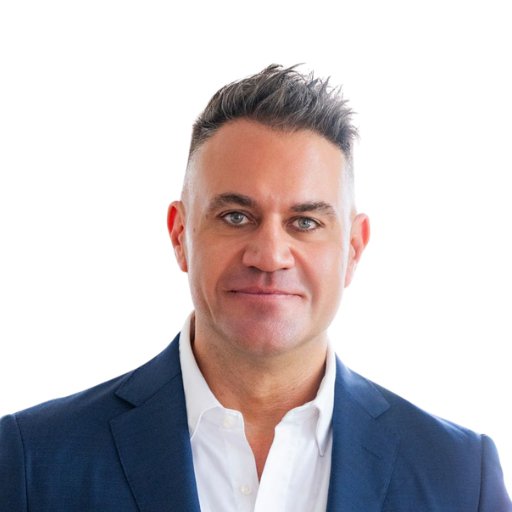

Nothing is more exciting than when companies throw around terms, and the operative term at the moment is trust. There’s a public perception that trust is fluffy, but it’s more than that, says Chief Trust Officer at Commvault, Danielle Sheer.
“Just because you say it doesn’t mean you have it,” Sheer fires off.
Trust amongst other buzz words are the industry’s favourite self-promotion words. Whether it’s marketing spin or reality, Sheer made a point that trust needs to be defined by, ‘Who inside your organisation is actually accountable for trust?’
In most companies? No one. But that needs to change, and here’s why.
The cybersecurity industry is popping off with record investment, louder vendors, more technology than ever, and yet a growing disconnect between companies and the people who rely on them. Sheer informed me recently in New York City at the Commvault Shift 2025 annual conference that trust isn’t a marketing slogan… it’s an operating function. Trust is also a job and a discipline. And its absence shows up first during crises.
“Business is still about relationships,” she says. “When there’s a cyberattack, people aren’t looking for AI answers. They need a human.”
Finding a human is the answer. No one is keen on resorting to AI to solve their problems.
Customers are already exhausted with the social media ads, AI-generated videos and virtue signalling statements. All of this has unfortunately diluted credibility, and companies that drag their feet on transparency aren’t just falling behind, they’re actively eroding confidence. And customers see that from a mile away.
Sheer frames her role as running a cross-organisational ‘trust operating system’ which marries up legal, privacy, product security, governance, and investor relations, all moving in unison.
Trust isn’t built by comms teams polishing a statement after the incident. It’s built by systems that don’t collapse when reality hits. The part that gets interesting is delayed transparency, which has become the default for many organisations.
If an airline is offline for 24 days, who’s booking a flight when they come back?
Reputation isn’t elastic. Stretch it too far and it snaps. The answer is no one is booking a flight 24 days later, they’ve lost the game.
The industry’s long-standing cultural reflex has been to minimise, delay, and sanitise. It’s common to hear of customers learning about breach impacts months after the fact. Sheer is openly critical of that playbook.
“Six months later, finding out how the breach affected me? That doesn’t strengthen trust.”
At Commvault, Sheer made a point that the cultural norm is the opposite.
“You’ll never hear someone on our legal or privacy teams tell you not to be transparent. Share information as soon as it’s credible.”
Ask anyone who lived through the Norsk Hydro breach, and they’ll tell you the same thing, transparency didn’t just stabilise them, it made them stronger. Their stock price rose after a major cyberattack, an anomaly in this industry. Most stocks post breach plummet for ages.
Sheer sees it as evidence of a truth too many executives ignore. The natural instinct to hide cripples trust more than the breach itself.
“It takes time to understand an incident. But the collateral damage from covering it up? We’ve seen it over and over.”
The companies that survive aren’t the ones with the best tools, they’re the ones with the strongest human relationships, the ones who earn goodwill before a crisis and reinforce it during an incident.
Automation can only carry cybersecurity so far.
“AI can take 80% of the work,” she says. “But the rest? Make some friends. Who are our top 200 customers? Do we know them?”
Unfortunately, CISOs and security teams have become so squeezed by noise, compliance, and tooling complexity that they’ve stopped engaging in the one thing AI can’t replace, which is relationship building.
And those relationships become currency when everything goes pear shaped.
However, Sheer says the tide is fortunately turning.
“Microsoft discloses early and often. CISOs who have lived through public breaches…they’re not interested in lip service.”
The next wave of security leadership, she argues, won’t be defined by technical depth alone but by frankness, presence, and maturity to speak plainly even when the news is glum.
Trust, in Sheers words, “could be fluffy.” If companies let it.
But if companies can design it deliberately across product, legal, governance, and privacy, and test it like any other critical system, it becomes a competitive advantage.
Trust is not measured by how a company markets itself when things are calm.
It’s measured by how it behaves minutes, hours, and days after something goes terribly down hill.
And the industry knows this moment is coming, and it’s not ‘if,’ but ‘when?’.