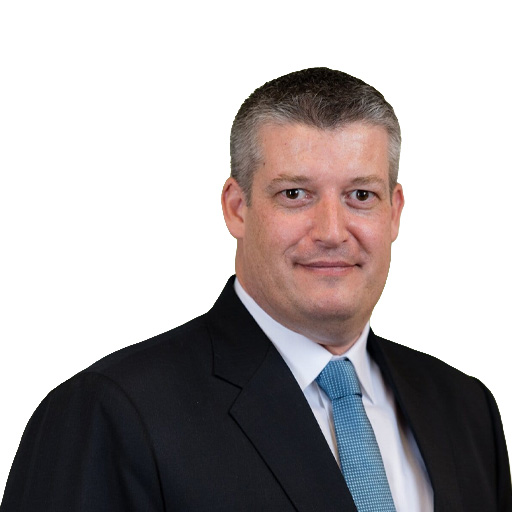


Are we there yet with quantum computing? Paddy McGuinness, former UK Deputy National Security Advisor and current Senior Advisor at Brunswick Group, brings insights into the quantum conversation from leading national resilience and cyber security in the UK to his current advisory role. McGuinness reflected on his tenure in government service, focusing on the strong sense of mission, especially when it came to preparing for national crises and dealing with cyber threats.
"I was the last man before the Prime Minister on issues that most affect the UK and its population. I wasn't allowed not to have a plan or a response," McGuinness divulged, highlighting the high stakes and stringent responsibilities of his governmental role.
Breaking down the concept of quantum computing, interestingly, McGuinness admitted to not being an expert in quantum mechanics or Q-bits but explained the potential of quantum technologies.
"Quantum computing promises an ability to compute at a scale and speed that is exponentially different from current supercomputers. This will be transformational," McGuinness remarked.
He drew parallels to the advancement of artificial intelligence and its unforeseen impacts, McGuinness predicted a similar trajectory for quantum computing. As businesses and governments slowly adapt to this technology, he stressed the importance of preparing for quantum's eventual integration into society.
We are on the brink of a 'Quantum Age’, McGuinness confirmed that the technology's primary promise lies in amplifying computational capabilities. He explained that quantum’s transformative power will revolutionise data processing, analytics, and risk mitigation.
"We're already seeing reports, though unverified, of low-level encryption being broken by supposed quantum compute capabilities from China. This is likely a harbinger of more to come," he noted, advocating readiness for quantum's imminent arrival.
Are We Quantum Ready?
McGuinness’ analysis of global preparedness for quantum computing, particularly in cyber security – ‘is getting there’. Citing the United States federal directives for cryptological audits, he outlined the steps that need to be taken to secure data against quantum decryption capabilities.
"I don't think we are globally ready yet, certainly not in terms of encryption," McGuinness declared.
He elaborated on his work with Venari Security, examining cryptographic integrity and the discovery of common vulnerabilities, such as use of outdated TLS 1.0 encryption and unexpected data transfers to locations like Moscow.
McGuinness addressed a common misconception in industry circles that the onus of regulation and readiness falls squarely on the government.
Data security is primarily the responsibility of the data holders.
"If quantum compute undermines your existing security arrangements, that’s your problem, not the government’s. You took the data in trust. And if you aren't thinking about how to deal with that, then there's a problem," he asserted.
Excitement about the potential accelerations quantum computing could bring is definitely there. Although, McGuinness voiced concerns about energy constraints in regions like Europe, which may hinder their participation in this technological race compared to the US and China, who are advancing in nuclear energy to support such compute-intensive technologies.
"Innovation through AI can occur more significantly where you have large data and speedy compute. This may increasingly be the domain of those with energy to compute at scale,” he predicted.