
REDWOOD CITY, CA, May 26, 2026— Check Point® Software Technologies Ltd. (NASDAQ: CHKP), a pioneer and global leader of cyber security solutions, today released its 2026 Cloud Security Report: Enter the AI Era, revealing a growing disconnect between rapid AI adoption and security readiness.
The report reveals a critical shift from the cloud “blind spots” of 2025 to a deeper challenge in 2026: organizations are no longer just struggling with visibility, but with governance, control, and real-time enforcement. AI is changing how users behave, how applications communicate, and where threats enter the environment. This year, 77% of organisations have updated their security strategy for cloud in response to AI, yet only 26% report having the architecture to enforce it. This reveals a 51-point gap between intent and capability.
Meanwhile, attackers are weaponising AI tools to accelerate phishing, generate malware, and launch adversarial attacks faster than traditional security models can respond. The impact is already measurable: 78% of organizations reported confirmed or suspected AI-related security incidents over the past year.
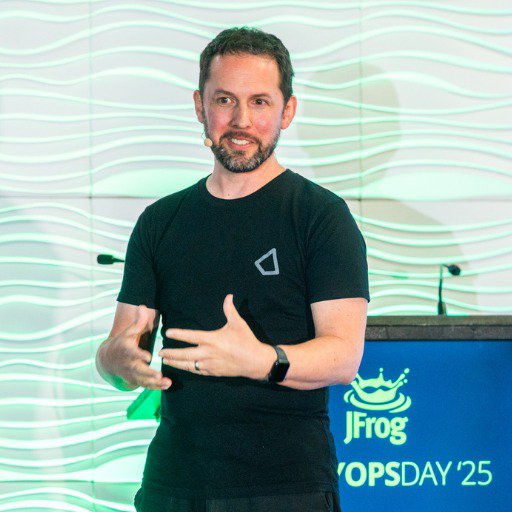
“The 2026 Cloud Security Report confirms what many security practitioners already sense,” said Paul Barbosa, Vice President of Cloud Security and SASE at Check Point Software Technologies. “AI adoption has outpaced the architecture built to govern it. Agents are acting inside live systems; data is moving through external AI services, and most enterprises still lack the visibility and enforcement to keep pace. At Check Point, we believe security has to be built into the architecture from the start. Beginning at the infrastructure layer, through clouds, and especially at runtime. Visibility, Control, and Security need to be present at all layers in the stack AI workloads will operate in. “

Paul Barbosa, Vice President of Cloud Security and SASE at Check Point Software Technologies
Key findings for cloud-native environments include:
- Infrastructure Misalignment: 52% of AI workloads span hybrid environments, yet 64% say their architecture needs redesign
- Perimeter Gaps: 76% rate datacentre security as critical for AI, but only 35% say it can support current needs
- Performance Challenges: Only 24% can fully inspect AI traffic without impacting performance; 71% report increased WAF false positives
- Operational Complexity: 88% say AI has increased security complexity; 67% report fragmented policies
- Limited Visibility: 54% of organisations have experienced an AI-related security incident, while another 24% cannot confirm due to lack of visibility. This means more than three-quarters have either been hit or cannot determine whether they have
- Identity Risks: 48% cite non-human identities (AI agents, APIs) as a top concern
- Inconsistent access model: Organisations have yet to converge on a single access model. 24% say they have no AI-specific access controls, and only 16% enforce controls consistently across the environment
Closing the AI Security Gap
To address these challenges, the report emphasises the need for a unified, prevention-first architecture across cloud, datacentre, SaaS, and endpoints.
Check Point’s Hybrid Mesh Network Security approach delivers:
- Unified Management: 86% of leaders rate unified security management across cloud, datacentre, and edge as critical for AI workloads. A hybrid mesh architecture keeps policies and protections consistent everywhere, no matter where data or workloads run
- Prevention-First Security: Real-time blocking of ransomware, zero-day threats, and data leaks using AI-driven insights, validated by a 99.8% security effectiveness score in the 2026 Miercom report
- Secure Connectivity and Threat Prevention: Identity-based protection ensures every user, device, and application is verified and protected in real time, with consistent security across all access points and without impacting performance
- AI Defense Plane: A unified control plane governing how AI is connected, deployed, and operated, with runtime protection across employee AI use, applications, and agentic systems
- Agentic Network Security Orchestration: The 51-point enforcement gap is more than a visibility problem; it’s also an operational one. Check Point’s newly launched Agentic Network Security Orchestration Platform shifts security teams to the level of business intent, letting AI agents autonomously handle policy creation, Zero Trust tightening, and compliance across hybrid environments
Download the full 2026 Cloud Security Report: Enter the AI Era here, or read the accompanying blog post.
Follow Check Point on LinkedIn, X (formerly Twitter), Facebook, YouTube and our blog.
About Check Point Software Technologies Ltd.
Check Point Software Technologies Ltd. (www.checkpoint.com) is a global cyber security leader protecting more than 100,000 organisations worldwide. Its mission is to secure enterprises’ AI transformation. With a prevention-first approach and an open ecosystem architecture, Check Point helps organisations block advanced threats, prioritize exposures, and automate security operations across complex digital environments. The unified architecture simplifies protection across hybrid networks, multi-cloud environments, digital workspaces, and AI systems. Structured around four strategic pillars, Hybrid Mesh Network Security, Workspace Security, Exposure Management, and AI Security, Check Point delivers consistent protection and visibility across multivendor environments, enabling organisations to reduce risk, improve efficiency, and accelerate innovation without increasing complexity.