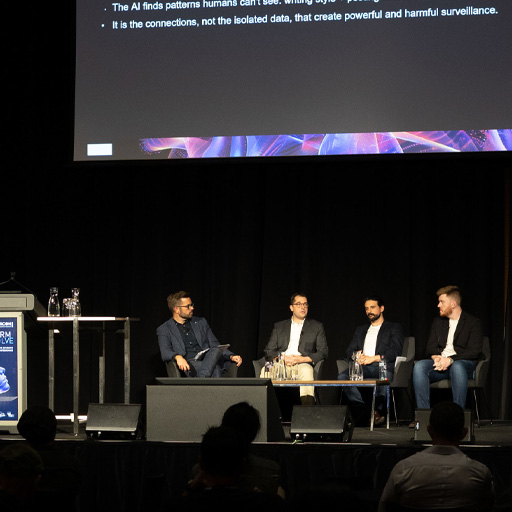


Cybersecurity has officially graduated from “something IT worries about” to a full-blown boardroom issue. These days, it sits somewhere between financial risk, operational resilience and reputational survival. If it still feels like a technical problem that can be delegated down the org chart, that’s usually the first warning sign.
The reality is that cyber incidents now tend to occur at the worst possible time, during reporting season, in the middle of a major transformation, or right before a long weekend. Unlike a power outage, they rarely resolve themselves by Monday morning.
From Tech Problem to Business Risk (Whether We Like IT or Not)
The volume and pace of cyber attacks have changed significantly over the past few years. Ransomware, credential theft and business email compromise are no longer clever one-off stunts; they’re repeatable, scalable business models. Many attacks are automated, fast and opportunistic, exploiting gaps that organisations already know about but haven’t yet fixed. For boards, the implication is straightforward. Cyber risk behaves like any other enterprise risk. It can halt operations, trigger regulatory scrutiny, erode customer trust and leave a very visible dent in enterprise value. Treating it as a compliance checkbox is a bit like installing a smoke alarm but never checking the batteries.
Geopolitics Has Entered the Threat Model
One of the less comfortable developments is that global politics now directly influences cyber risk. Tensions, conflicts and state-aligned activity mean more sophisticated tools are circulating more widely. What was once the domain of intelligence agencies is increasingly available to organised crime. That doesn’t mean every organisation is about to become a spy novel, but it does mean the baseline threat level is higher than it used to be. Boards should ask whether geopolitical factors are reflected in cyber risk scenarios, or whether they’re politely acknowledged and then ignored.
AI: The Attacker’s Apprentice and the Defender’s Best Mate
Artificial intelligence is having a significant impact on both sides of cybersecurity. On the attack side, it’s being used to craft phishing emails that are far more convincing than the old “Dear Sir Kindly Reset Password” variety. Business email compromise, already a favourite, is becoming harder to spot as messages sound exactly like the CFO on a busy Friday afternoon. On the flip side, AI is now essential to defence. Humans alone can’t keep up with the volume, speed and noise of modern threats. Detection and response increasingly rely on automation, behavioural analytics and machine learning to spot what doesn’t look right, even when everything technically checks out.
For boards, the question isn’t whether AI is in play, but whether it’s being governed sensibly. If it can move money, isolate systems or trigger responses, someone needs to be accountable for how it behaves when things get messy.
Regulation Has Teeth… and IT Knows Where the Board Sits.
Regulators have made it clear that cyber resilience is not optional and not delegable. Expectations are shifting away from glossy policies and toward evidence of real capability: clear ownership, tested response plans and decision-making that holds up under pressure. This is where boards often get an unpleasant surprise. Incident response looks tidy on paper, but when legal, communications, operations and technology all collide in real time, gaps appear quickly. Regulators are increasingly interested in how prepared organisations actually are, not how confident they sound in hindsight.
Tomorrow’s Problems Are Arriving Faster Than Expected
Longer-term issues like cryptographic resilience and quantum computing used to live safely in the “future us will deal with it” category. That buffer is shrinking. Planning for post-quantum cryptography is becoming a legitimate board-level horizon issue, particularly for organisations with long-lived systems or sensitive data that needs to stay confidential for decades.
Ignoring it won’t cause immediate pain, but leaving it too late tends to make technology teams grumpy and budgets nervous.
People and Suppliers Still Trip Us Up
Despite all the tools, dashboards and investment, people remain central to cyber risk. Social engineering works because it targets behaviour, not systems. Culture, incentives and leadership matter more than another mandatory training video everyone clicks through while answering emails. Then there’s third-party risk. Most organisations are only as secure as their least prepared supplier. When something goes wrong in the supply chain, it quickly becomes your problem. Boards should have confidence that critical partners are being assessed, monitored and contractually held to account, not just trusted on good vibes.
What Boards Should Actually Be Doing
Boards don’t need to become cyber experts, but they do need to ask sharper questions. What really matters? How quickly would we know if something serious was happening? Who makes the call when the pressure is on and the clock is ticking? Clear, plain-English reporting, realistic scenario-based exercises and well-understood accountabilities go a long way. Cyber security is not about being bulletproof; it’s about being ready.
Cyber incidents are no longer rare, surprising or someone else’s problem. They are a regular feature of doing business in a digital economy. Boards that engage early, keep the conversation practical and resist the urge to overcomplicate tend to fare much better when things go wrong. Resilience, like most good governance, is built before you need it, preferably before the headlines start writing themselves.